 Skip to main content
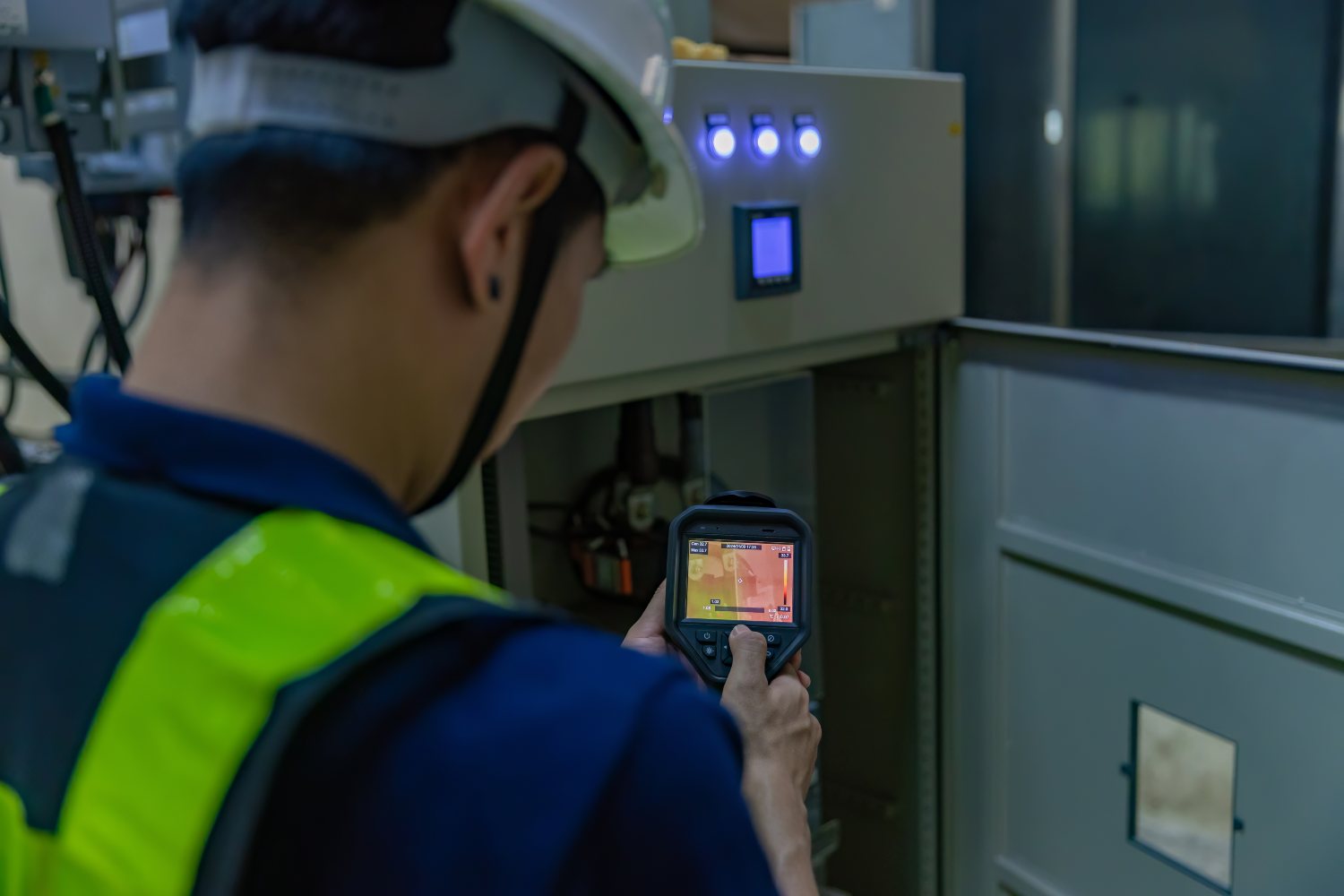
Electrical systems are fundamental to the safe and efficient operation of commercial and industrial buildings. From powering machinery and HVAC systems to supporting critical infrastructure and distribution boards, businesses rely heavily on electrical equipment operating safely under normal load conditions. However, many electrical faults develop silently, creating excess heat long before visible signs of failure appear.
In fact, hidden electrical faults are a leading cause of commercial electrical fires and unexpected equipment failures, often resulting in costly downtime and insurance risk.
An electrical thermal imaging inspection provides a non-invasive way to identify these hidden issues before they lead to electrical or equipment failure, costly downtime, or even electrical fires. Using advanced thermal imaging cameras and infrared technology, engineers can detect overheating components, loose connections, overloaded circuits, and other electrical problems while systems remain operational.
In this guide, we’ll explain how electrical thermal imaging inspections work, what they can detect, and why they form an essential part of modern preventive maintenance programmes.
What is an electrical thermal imaging inspection?
This kind of inspection is a specialist assessment that uses infrared thermography to evaluate the condition of electrical systems and equipment. The process involves using thermal imaging cameras to detect infrared radiation naturally emitted by electrical components and convert it into a visual image.
Because all objects emit thermal energy, electrical equipment operating under load generates heat. When electrical components begin to deteriorate, develop poor connections, or become overloaded, they often produce higher temperatures than surrounding equipment. Thermal imaging enables engineers to identify these temperature variations before they result in faults or failures.
Unlike conventional electrical inspections, thermal imaging allows engineers to assess live electrical systems without dismantling equipment or interrupting operations. For this reason alone, electrical thermal imaging inspections are particularly valuable for commercial and industrial environments where continuous operation is essential.
How does electrical thermal imaging Work?
Thermal imaging works by capturing infrared radiation that the human eye can’t see. Advanced thermal cameras detect heat emitted by objects and convert it into thermographic images that show temperature differences across equipment and systems.
Areas with higher-than-expected temperatures may indicate a developing problem. For example, a loose connection in a distribution board may increase resistance, resulting in excess heat. Similarly, overloaded circuits, phase imbalance, or failing components can produce abnormal thermal patterns that become visible through infrared imaging.
The resulting images provide a visual representation of surface temperatures, allowing engineers to compare equipment operating under similar load conditions and identify anomalies requiring further investigation.
Environmental factors such as ambient temperature, air movement, and electrical load must also be considered when interpreting thermal images, which is why suitably trained professionals should always undertake inspections.
What can an electrical thermal imaging inspection detect?
One of the greatest advantages of electrical thermography is its ability to identify hidden issues before they become serious failures. Common faults identified during an electrical thermal imaging survey include:
- Loose or bad connections
- Overloaded circuits
- Phase imbalance
- Unbalanced load conditions
- Overheating cables
- Faulty circuit breakers
- Blown fuse connections
- High load connection points
- Electrical faults within switchgear
- Deteriorating electrical components
- Voltage drops
- Motor and excess heat issues
These issues often create hot spots that are impossible to detect during a visual inspection alone. By identifying them early, businesses can schedule repairs before they result in equipment failure, production interruptions, or safety risks.
Thermal imaging is also highly effective for identifying overheating within electrical panels, transformers, motor control centres, service connections, and critical infrastructure where reliability is paramount.
Why electrical thermal imaging inspections are essential
Early detection of electrical faults
Heat is often one of the earliest indicators of developing electrical issues. Electrical thermal imaging inspections allow engineers to detect faults long before visible damage occurs, helping businesses avoid unexpected breakdowns.
Reduced downtime
Unplanned equipment failure can significantly impact productivity and profitability. By finding issues before they escalate, it enables maintenance teams to schedule repairs during planned maintenance windows, reducing costly downtime.
Fire prevention
Electrical fires frequently originate from overheating components, poor connections, or overloaded circuits. Thermal imaging helps identify these hazards before they become a serious safety risk.
Extended equipment lifespan
Electrical equipment subjected to excessive heat often experiences accelerated deterioration. Addressing problems early can extend equipment lifespan and reduce replacement costs.
Improved energy efficiency
Electrical thermal imaging surveys can also identify inefficiencies contributing to increased energy consumption. Overheating components, unbalanced loads, air leakage, and poorly performing HVAC systems may all impact energy efficiency and increase operating costs.
Support for preventive maintenance
Thermal imaging forms an important part of preventative maintenance strategies by providing actionable data about equipment condition before failures occur.
Which electrical systems should be inspected?
Electrical thermal imaging inspections can be carried out across a wide range of electrical systems. Still, particular attention should be given to equipment that supports power distribution, operational continuity, and safety. Identifying developing faults within these assets helps reduce the risk of wholesale equipment failure, electrical fires, and costly downtime.
Electrical panels, distribution boards, switchgear, transformers, and service connections are among the most commonly inspected components. These systems often operate under significant electrical load and can develop loose connections, poor connections, or overheating that may not be visible during a routine inspection.
Motor control centres, motors, HVAC systems, generators, and critical infrastructure should also be included in a regular electrical thermal imaging survey. Excess heat in these systems can indicate electrical faults, phase imbalances, overloaded circuits, or failing electrical components, which could affect performance and reliability.
By inspecting key electrical equipment under normal operating conditions, thermal imaging helps businesses identify potential issues early, support preventive maintenance programmes, improve energy efficiency, and extend equipment lifespan.
High-risk or critical infrastructure such as data centres, hospitals, and industrial facilities should always be prioritised due to continuous load demands and operational sensitivity.
When should an electrical thermal imaging survey be carried out?
The appropriate inspection frequency depends on the nature of the facility and the criticality of its electrical systems. For many commercial buildings, annual electrical thermal imaging surveys are sufficient and can be scheduled alongside EICRs and planned maintenance programmes. However, more frequent inspections may be appropriate for:
- Data centres
- Manufacturing facilities
- Hospitals
- Industrial plants
- Distribution centres
- Critical infrastructure sites
Additional inspections may also be advisable following major maintenance work, electrical upgrades, equipment replacement projects, or significant changes in electrical load.
Preparing for an electrical thermal imaging inspection
Proper planning helps ensure accurate results and efficient site visits. Before an inspection takes place, engineers typically review:
- Site objectives
- Electrical drawings and single-line diagrams
- Equipment lists
- Previous inspection reports
- Maintenance history
Inspections should ideally occur when systems are operating under normal load conditions, as low electrical load can mask developing issues.
Site safety is also critical. Engineers should wear appropriate personal protective equipment and follow all site-specific safety procedures when accessing live electrical equipment.
What happens during the inspection?
During an electrical thermal imaging inspection, engineers assess electrical systems while they’re operating under normal load conditions. Live inspections allow thermal patterns and temperature variations to be observed in real time, helping to identify developing faults that would not be visible during a standard visual inspection.
The process is systematic and non-invasive, meaning equipment remains energised throughout. Engineers typically follow a structured process that includes:
- Conducting a site safety assessment and confirm access requirements
- Visually inspecting electrical equipment before scanning begins
- Using a thermal imaging camera to scan panels and components
- Capturing thermal and visual images for comparison
- Measuring load conditions and temperature differences using supporting tools
- Recording and documenting any abnormal heat patterns for reporting
This approach ensures accurate diagnosis of potential issues while minimising disruption to operations.
Understanding the inspection results
Once the inspection survey is complete, clients receive a detailed report containing both thermal and visual images. The report typically includes:
- Equipment identification
- Thermal images
- Visual photographs
- Temperature readings
- Temperature differentials
- Severity assessments
- Recommendations for corrective action
Not all hot spots indicate immediate failure. Experienced thermographers evaluate findings in the context of load conditions, ambient temperature, and equipment type before determining the level of risk.
Where significant anomalies are identified, further investigation or immediate remedial action may be recommended.
Standards, compliance, and best practice
Electrical thermal imaging inspections are widely recognised as best practice for maintaining electrical systems and managing operational risk.
Many organisations follow guidance published by the International Electrical Testing Association (NETA) and relevant NFPA standards when undertaking thermographic inspections.
Thermal imaging can also support compliance with health and safety obligations by demonstrating a proactive approach to managing electrical risks and maintaining critical systems.
Additionally, insurers increasingly recognise the value of electrical thermographic surveys in reducing the likelihood of electrical fires and equipment failures.
Follow-up actions after an inspection
Identifying faults is only part of the process. Once issues have been detected, businesses should implement corrective actions based on risk and operational criticality. Typical follow-up actions include:
- Tightening loose connections
- Repairing poor connections
- Replacing damaged components
- Balancing electrical loads
- Repairing overheating cables
- Investigating voltage drops
- Upgrading overloaded circuits
After repairs are completed, a follow-up thermographic survey may be conducted to verify that the issue has been successfully resolved.
Maintaining detailed records of inspections, repairs, and outcomes also supports ongoing asset management and future maintenance planning.
Why choose Clark Electrical Industries Ltd?
At Clark Electrical Industries Limited, we provide professional electrical thermal imaging inspection services for commercial and industrial clients across London and throughout the Home Counties.
With more than 70 years of industry experience, our qualified engineers use advanced thermal imaging cameras and infrared technology to identify hidden faults before they become serious problems. We deliver comprehensive electrical thermal imaging surveys, detailed reporting, and practical recommendations that help businesses improve safety, maintain compliance, and reduce operational risk.
Whether you’re managing a manufacturing facility, commercial office, educational premises, healthcare environment, or critical infrastructure site, our team can provide tailored thermal imaging solutions to support your planned preventative maintenance programme.
Frequently Asked Questions
What is an electrical thermal imaging inspection?
An electrical thermal imaging inspection uses infrared technology to detect temperature variations and overheating within electrical systems. It helps identify faults that may not be visible during conventional inspections.
How often should thermal imaging inspections be carried out?
Most commercial premises benefit from annual inspections. Critical infrastructure and high-load environments may require more frequent surveys depending on operational demands.
Can thermal imaging detect electrical fires before they happen?
While it cannot predict every incident, thermal imaging can identify overheating components and fire risks before they escalate into electrical fires.
Do systems need to be switched off during the inspection?
No. Electrical thermal imaging inspections are typically carried out while equipment remains energised and operating under normal load conditions.
What happens if a hot spot is discovered?
The issue will be documented within the report and prioritised according to severity. Further investigation, repairs, or immediate corrective action may be recommended.
Do insurance companies require thermal imaging inspections?
Some insurers encourage or require thermographic surveys for higher-risk properties, particularly industrial facilities and sites containing critical electrical infrastructure.
How long does an electrical thermal imaging survey take?
The length of any survey depends on the size and complexity of the installation. Small commercial sites may take only a few hours, while larger facilities may require a full day or more.
