 Skip to main content
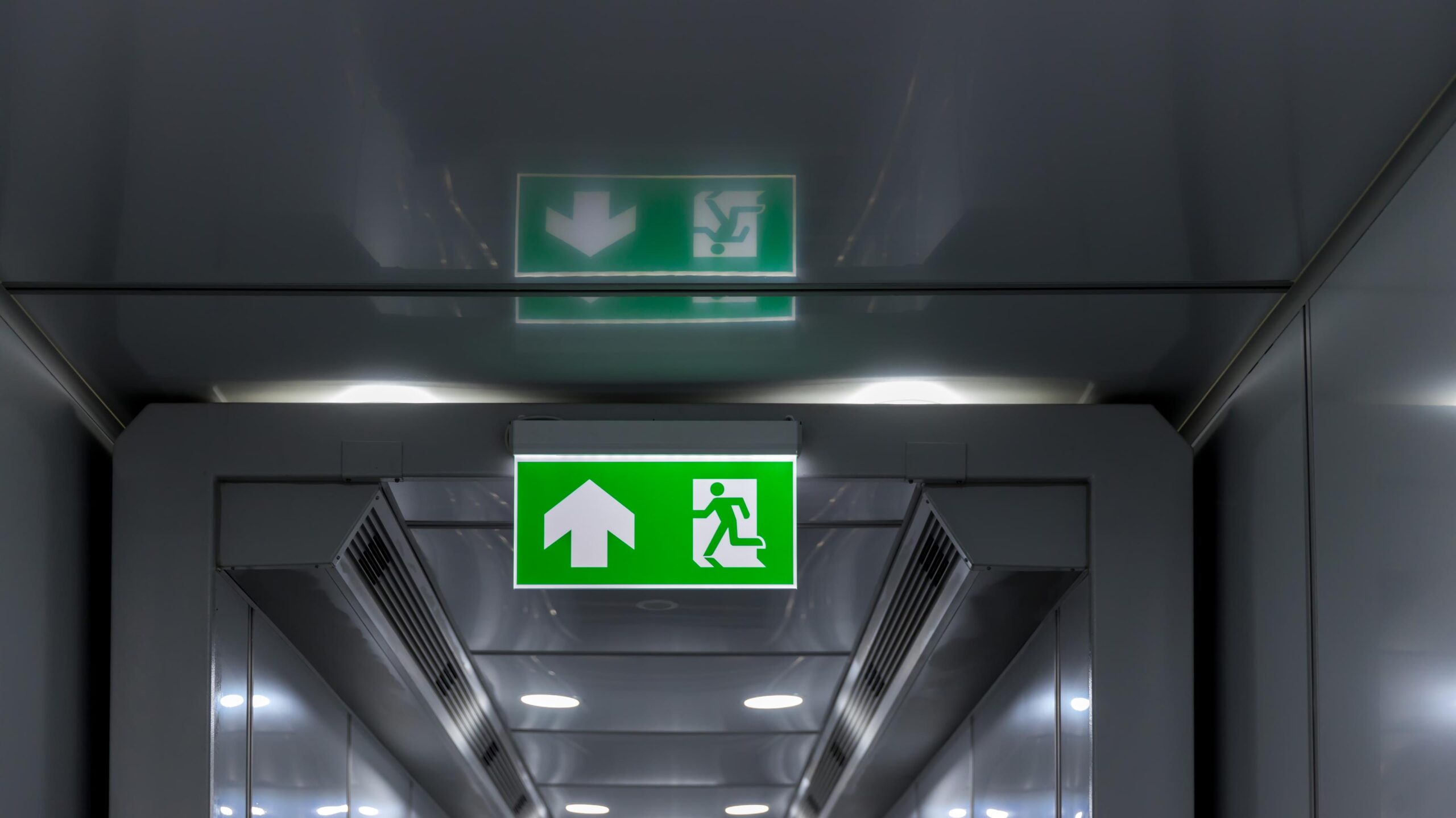
When normal lighting fails, those first few seconds matter. In an office, hotel, shop, school, clinic or warehouse, emergency lighting is not simply an added feature. It keeps escape routes visible, helps reduce the risk of panic and supports a faster, safer evacuation.
For commercial and industrial premises, emergency lighting systems are a practical part of fire safety and day-to-day risk management. They need to operate immediately in the event of a power failure, especially where occupants rely on clearly lit routes to the nearest fire exit.
In everyday use, many people refer to everything as emergency lighting, but in fire safety terms the main focus is emergency escape lighting. This form of emergency safety lighting keeps exit routes usable when normal lighting fails, helping people escape safely and supporting the safe use of the building during an emergency.
When normal lighting fails, those first few seconds matter. In an office, hotel, shop, school, clinic or warehouse, emergency lighting is not simply an added feature. It keeps escape routes visible, helps reduce the risk of panic and supports a faster, safer evacuation.
For commercial and industrial premises, emergency lighting systems are a practical part of fire safety and day-to-day risk management. They need to operate immediately in the event of a power failure, especially where occupants rely on clearly lit routes to the nearest fire exit.
In everyday use, many people refer to everything as emergency lighting, but in fire safety terms the main focus is emergency escape lighting. This form of emergency safety lighting keeps exit routes usable when normal lighting fails, helping people escape safely and supporting the safe use of the building during an emergency.
Emergency Lighting Systems in Commercial Premises
Emergency lighting systems are a core part of fire safety in commercial and industrial premises. Across many business premises, they help keep escape routes and fire exits visible so occupants can leave the building more safely.
In the UK, fire safety legislation requires emergency lighting in business premises where artificial lighting is needed for escape routes and exits. The responsible person must ensure the system is suitable for the premises, supported by the fire risk assessment, and regularly tested and maintained in line with current standards, including BS 5266.
This includes emergency escape lighting, which helps people move safely towards exits, and, where relevant, standby lighting for areas that may need lighting to remain usable during a power failure. Regular testing, record keeping and ongoing maintenance are essential to show that the system remains reliable and compliant over time.
What Are the Current Requirements for Emergency Lighting in the UK?
For businesses in London, the main legal reference is the Regulatory Reform (Fire Safety) Order 2005, which applies in England and Wales. GOV.UK states that responsibility for fire safety in business and non-domestic premises may lie with the employer, the owner, the landlord, the occupier or any person with control over the property, such as a facilities manager, building manager or managing agent.
This person is the responsible person. Different rules apply in Scotland and Northern Ireland. However, in practice, the responsible person must ensure that a suitable fire risk assessment is carried out, reviewed regularly and acted upon, while appropriate fire safety measures are implemented and maintained.
Where escape routes and exits require artificial lighting, the law requires emergency lighting of adequate intensity in the event of a failure of the normal lighting. Official guidance from the Home Office also makes clear that, while emergency lighting may not be necessary in some very small premises, it will usually be expected in most modern commercial buildings.
This is where technical standards come in. BS 5266-1:2025 is the current British code of practice for emergency lighting in premises. BSI states that the 2025 revision broadened the scope of the standard to include local area lighting and standby lighting, in addition to traditional emergency escape lighting, and aligned it with BS EN 1838:2024 and BS EN 50172:2024. For design, inspection, maintenance and routine testing, BS 5266 remains one of the main technical standards for emergency lighting in UK business premises.
How Often Should Emergency Lighting Be Tested?
Emergency lighting must be properly installed, tested and maintained. In practice, this means carrying out regular checks to confirm that the system is working correctly, recording any faults, and keeping suitable testing and maintenance records. The detailed requirements sit within current standards and established industry practice, but the usual structure is straightforward: regular functional testing supported by a full annual inspection and test.
For most commercial premises, that means monthly tests, including monthly functional tests to confirm that emergency escape lighting operates when the normal lighting supply fails, followed by annual emergency lighting tests carried out by a competent person or contractor to verify that the system remains capable of delivering the required performance for its intended duration. This approach reflects current Home Office guidance for small non-domestic premises and remains a sensible testing schedule for many business premises across the wider UK market.
The value of the annual test is clear. It shows not only that the lights come on, but that the lighting system can continue to support safe evacuation in the way the building requires. Just as importantly, testing frequency should not be treated in isolation from the fire risk assessment, because emergency lighting needs can change as the premises change. Records should also show that the system remains under proper control.
Official guidance is clear that fire risk assessments must be reviewed regularly and updated when there is reason to think they are no longer valid or when significant changes affect the premises. Changes to layout, compartmentation, room use, circulation routes or occupancy can all affect whether the existing emergency lighting remains adequate and correctly positioned.
What Should Be Checked During Emergency Lighting Testing?
In any lighting system, the aim of testing is to confirm that the emergency lighting comes into operation when the normal lighting fails, that escape routes remain usable, and that the system remains fit for its intended purpose. Visual inspection forms part of that process, alongside routine inspections, testing, servicing and repairs, showing that emergency lighting testing is not a one-off task but part of a wider system of ongoing management.
This includes checking whether luminaires activate correctly, whether there is visible damage, obstructions, dark spots, deteriorated components or any sign that the installation no longer matches the building’s current condition. It also includes recording faults, retaining testing and repair information, and making sure corrective action is followed through.
Official fire safety guidance is clear that emergency lighting should be checked regularly and that testing and maintenance records may be examined by enforcing authorities as part of broader fire safety compliance.
Many managers only realise too late that a system can appear to be in order but still fail when it is needed most. That is why the annual duration test matters so much. It helps show whether the lighting system can continue to perform for the required period, rather than merely demonstrating a brief response to a power failure. In premises with higher-risk areas, more complex occupancy or more demanding evacuation arrangements, that distinction becomes even more important.
Why Does Ongoing Maintenance Matter More Than a One-off Test?
Many people treat emergency lighting testing as an administrative formality. Carry out the test, complete the log and move on. That is a short-sighted approach. The reality of a commercial property is constantly changing. Building works, new furniture, layout changes, altered routes, new partitions and changing working patterns can all affect how the premises function in practice.
When that happens, the fire risk assessment may need to be reviewed, and the emergency lighting may need to be adapted as well. Official guidance is clear that assessments should be reviewed regularly and whenever there is a significant relevant change. That is one of the main reasons ongoing maintenance matters: fire safety compliance is judged as a system, not as a one-off installation.
The responsible person must maintain appropriate fire safety measures, and emergency lighting does not exist in isolation. It works alongside fire alarm systems, fire exit signs, escape routes, fire doors, evacuation procedures and staff training. If those elements no longer reflect the real conditions of the premises, the level of risk increases even where the original installation was correct.
Ongoing maintenance also reduces commercial and legal risk. Local fire and rescue authorities may inspect premises, issue notices and require corrective action. GOV.UK states that failure to comply with fire safety regulations can lead to fines or imprisonment, with the most serious cases attracting unlimited fines and up to two years in prison.
Compliance Errors Most Commonly Made by Businesses
A common mistake is to assume that the original installation solves the problem once and for all. It does not. In larger, modern premises, emergency lighting is often already in place when the building is constructed, but that does not remove the need to verify whether the system remains suitable for the premises through the fire risk assessment and ongoing testing and maintenance.
Another recurring mistake is assuming that, because emergency lighting is already installed, compliance is fully covered. It is not. A further issue is failing to define clearly who is responsible for compliance, particularly in shared premises. In these properties, there is often more than one responsible person, and they must cooperate and coordinate their actions.
For communal areas, responsibility will usually sit with the landlord, freeholder or managing agent. This is especially relevant in multi-occupancy buildings, clinics, shared offices, retail units and other premises with communal circulation areas.
Poor documentation is another common weakness. If faults are not recorded, if corrective actions are not followed up, or if there is no clear record of testing and maintenance, the business loses the ability to demonstrate due diligence. Record-keeping is not an administrative extra; it is part of compliance.
Official enforcement guidance makes clear that fire safety audits may include examination of fire safety records, including records of testing and maintenance of fire protection equipment. Many businesses also continue to rely on outdated technical specifications, which creates further compliance risk as standards and the practical use of the premises evolve.
Why Choose Clark Electrical Industries?
For those looking for a contractor, the decision is rarely based on price alone. What matters is the ability to provide testing, maintenance, remedial work and ongoing support for emergency lighting systems without turning compliance into a recurring issue. Clark Electrical Industries has been established since 1952, with over 70 years of experience, and works with clients in the hospitality, retail, healthcare and education sectors, offering installation, repair and servicing solutions.
Emergency lighting is not a one-off service. It is a system that needs to be assessed over time, particularly in premises with heavy usage, communal areas, operational changes and documentation requirements. For this type of client, the value of an experienced partner lies not just in carrying out a test, but in keeping the lighting system reliable, documented and aligned with the building’s current reality.
Summary
The requirements for testing emergency lighting in the UK must be properly understood. For businesses in London, the main legal basis is the Regulatory Reform (Fire Safety) Order 2005 and the duties of the responsible person.
The suitability of emergency lighting systems must be considered in the fire risk assessment, and the system must be regularly tested and maintained in line with BS 5266 and current guidance. Ongoing maintenance is important because compliance does not end with installation.
A system is only truly reliable when it remains suitable for the layout, use and occupancy profile of the premises, when tests are carried out at the correct frequency, when faults are recorded and rectified, and when documentation shows that the business is managing risk seriously.
For any business wishing to reduce legal exposure, protect people and avoid failures at critical moments, continuous maintenance is not overzealous; it is part of the responsibility.
Frequently Asked Questions
Is emergency lighting testing a legal requirement in the UK?
Yes, the legal obligation stems from the responsible person’s duty to implement and maintain appropriate fire safety measures. GOV.UK requires regular checks to confirm that emergency lighting is working, and the legislation requires adequate emergency lighting where escape routes and exits require artificial lighting.
Who is responsible for emergency lighting in a commercial property?
It may be the employer, the owner, the landlord, the occupier or another person with control over the premises, such as a facilities manager, managing agent or building manager. In shared properties, there may be more than one responsible person, and they need to coordinate their responsibilities.
Does every business need to install emergency lighting?
Not always in absolute terms, but in practice, the vast majority of commercial premises do. Official guidance states that only in very small premises may emergency lighting not be necessary; in larger, modern commercial buildings, it is usually an expected requirement and its suitability must be verified in the fire risk assessment.
How often should emergency lighting be tested?
The general requirement is for regular testing and maintenance. This typically involves monthly tests, regular functional tests and annual emergency lighting tests, including an annual full-duration test, as part of a testing schedule that reflects current standards, BS 5266 and the risk level of the premises. If there are significant changes to the property or its use, the fire risk assessment must also be reviewed.
What happens if the company fails to keep the system compliant?
Local fire and rescue authorities may inspect the premises, request records, issue notices and take enforcement action. Non-compliance can lead to fines, and the most serious penalties can include unlimited fines and up to two years in prison.
