 Skip to main content
When it comes to PAT testing in the workplace, there is still a great deal of confusion in the UK. Many employers believe that the law requires an annual test for all electrical appliances, whilst others go to the opposite extreme and treat the matter as mere good practice with no legal weight.
Under UK law, electrical equipment used at work must be maintained in a safe condition to prevent danger, and PAT testing is one of the most widely recognised ways of supporting that legal duty under wider health and safety laws.
In the UK, PAT testing is not a standalone legal requirement by name. However, the legal framework behind these duties includes the Electricity at Work Regulations 1989 and the Health and Safety at Work etc. Act 1974. The Health and Safety Executive (HSE) makes clear that employers must take a risk-based approach to electrical safety, ensuring that portable appliances and other workplace electrical equipment remain safe to use. In practice, this means having an appropriate system of inspection, maintenance and, where necessary, testing to demonstrate compliance.
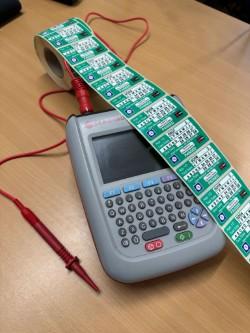
Why Safe Electrical Practice Matters in the Workplace
Safe electrical practice is a basic part of workplace compliance and day-to-day risk management. Employers must ensure that electrical equipment is used and maintained safely to prevent danger, reduce electrical hazards and avoid serious accidents.
In practice, this means having a suitable system for checking portable appliances and other workplace equipment so they are regularly inspected according to how and where they are used. Regular PAT testing can play an important role in that system, alongside inspection, maintenance and risk-based review, helping employers meet their electrical safety obligations, ensure safety and support ongoing safety at work in line with electrical safety standards and wider health and safety requirements.
Is PAT Testing a Legal Requirement in the Workplace?
PAT testing is not, in itself, a specific legal requirement in the UK, but the safe maintenance of electrical equipment at work is. The key provision is found in the Electricity at Work Regulations 1989, which require systems to be maintained, so far as is reasonably practicable, in a way that prevents danger.
The Health and Safety Executive (HSE) also makes clear that the law does not specify exactly what must be done, by whom or how often, and it does not make the inspection or testing of portable appliances an automatic annual legal obligation. This legal duty is also reinforced by other regulations.
The Health and Safety at Work etc. Act 1974 places a duty on employers to ensure, so far as is reasonably practicable, the health, safety and welfare of workers, including the provision and maintenance of safe plant, equipment and systems of work.
Meanwhile, the Management of Health and Safety at Work Regulations 1999 require a suitable and sufficient risk assessment, while the Provision and Use of Work Equipment Regulations 1998 (PUWER), one of the key work equipment regulations, require work equipment and electrical systems to be kept in an efficient state, in efficient working order and in good repair. Together, these rules form the legal framework underpinning PAT testing legal requirements in the workplace and the wider PAT testing regulations employers are expected to follow.
What the Law Actually Requires of the Employer
The employer does not need to prove that they carried out PAT testing for its own sake; they need to show that they have taken appropriate measures to keep workplace electrical equipment safe. This means knowing which portable appliances and other equipment are in use and understanding where the main electrical hazards lie.
It also means deciding which items require only regular visual inspection and which require combined inspection with electrical tests, while acting promptly when faults, damage or signs of deterioration arise. This is the heart of the employer’s legal duty in practice.
The employer must also ensure that the control system is proportionate to the reality of the business. A monitor on an office desk, which is rarely moved and used in a dry environment, does not present the same risk as power tools on a construction site, mobile equipment in back-of-house areas, or appliances used in areas subject to heat, dust, vibration or a greater likelihood of mechanical damage.
This is why the HSE insists on a risk-based approach rather than a blind testing routine. That approach supports both safety and compliance by preventing under-maintenance in higher-risk areas and avoiding excessive testing where the risk is low.
What PAT Testing Involves in Practice
Although the name suggests merely a test, the PAT test involves more than simply connecting an appliance to a machine and printing out a result. Most electrical safety defects can be identified by visual inspection, but some problems only become apparent during testing; at the same time, certain defects are not detected by testing alone.
A proper portable appliance testing programme therefore begins with user checks and visual inspection, moves on to formal visual inspection where necessary and, where appropriate, includes testing carried out by a competent person who can conduct PAT testing safely.
In practical terms, this usually involves checking plugs, cables, casings, strain relief, signs of overheating, visible damage, makeshift repairs, loose parts, misuse and storage conditions.
Where the equipment and the level of risk justify it, electrical tests such as earth continuity, insulation resistance checks and polarity checks may then be carried out, together with other measurements appropriate to the type of appliance. Clark Electrical Industries Limited’s PAT service follows this approach, combining inspection, electrical tests and clear documentation of the results to support continued safe use or withdrawal from service where necessary.
How Often Should PAT Testing be Carried Out?
It depends. The frequency of inspection and testing depends on the type of equipment, how it is used, the environment in which it operates and the risk level associated with that use. A power tool used on a construction site will usually require more frequent attention than a light fitting in a hotel bedroom or a fixed desk unit in an administrative office.
The most common mistake is to turn general guidance into a fixed rule for all scenarios. In low-risk environments, such as offices, shops and some areas of hotels and care homes, it is a myth to claim that all portable electrical appliances require PAT testing every year.
In many cases, simple precautions, regular visual inspections and well-planned periodic checks are sufficient to keep safety under control. This does not mean letting standards slip; it means aligning maintenance with actual risk, usage patterns and the likelihood of electrical faults. In practice, risk assessments should be reviewed over time as equipment use, locations and exposure change.
For companies with many assets, this usually works best when PAT testing is integrated into a broader plan for planned preventative maintenance, supported by ongoing review of fault history and usage patterns.
In higher-risk environments, however, more frequent PAT testing may be the right decision. Equipment that is constantly being moved, cables subjected to tension, appliances used by multiple people, production areas, commercial kitchens, workshops, technical areas, and environments with high levels of humidity or dust all require greater vigilance.
In such cases, regular PAT testing ceases to be merely good organisation and becomes a central part of the electrical safety and ongoing safety strategy. The correct frequency is still determined by the risk assessment, but the need for more frequent inspections and tests is usually much easier to justify.
Who Can Carry Out PAT Testing?
Another common myth is the belief that only an electrician can carry out PAT testing. The HSE does not state the requirement in this way. What matters is that the person is competent to perform PAT testing or carry out basic checks safely. In low-risk environments, a sufficiently trained team member may be able to carry out visual inspections and basic checks, following PAT testing guidance where appropriate.
However, where the work involves combined inspection and testing, a higher level of knowledge is required. The person carrying out the work must know how to use the test equipment correctly and understand the test results well enough to decide whether the appliance can remain in service.
Many companies choose to use an external partner because this reduces uncertainty, improves the consistency of records and helps integrate PAT with other compliance requirements. This often makes even more sense where the business already relies on EICR, planned maintenance, fault-finding, out-of-hours support or ongoing service across different types of premises.
Clark Electrical Industries Limited is well suited to this model, providing inspection, testing, maintenance and operational support for commercial and industrial clients, with a focus on safety, compliance and continuous operation.
New Appliances, Records and Failed Appliances
New equipment must be supplied in a safe condition and, as a rule, does not require a formal portable appliance inspection or test before first use. Nevertheless, a simple visual check is recommended to confirm that the item has not been damaged during transport, storage or delivery.
This is particularly important in businesses that receive new equipment frequently, especially where there is a high turnover of assets. As for documentation, there is no general legal obligation to label tested electrical appliances or keep records of every such activity.
Even so, labels, reports and asset registers remain strongly recommended as management tools. They help monitor the maintenance schedule, review its effectiveness and demonstrate that the system is in place. So, even where record-keeping is not legally mandatory, it remains valuable evidence of due diligence.
If an item fails, the response must be immediate and practical. Equipment showing visible damage, a faulty plug, a deteriorated cable, insulation failure or any other significant electrical fault must not remain in use simply because it passed inspection last time or because operations are running late.
A proper portable appliance testing (PAT) programme is designed to identify problems before they lead to electrical accidents, operational downtime, property damage or unnecessary legal exposure. Maintenance exists to prevent electrical accidents, not to generate paperwork.
The Practical Value of PAT Testing
PAT testing adds value when it is used as part of a wider electrical safety system rather than as a box-ticking exercise. It helps identify electrical hazards, supports the safe use of equipment and portable appliances, and reduces the risk of accidents, disruption and avoidable downtime.
For employers, regular PAT testing can also support compliance by showing that electrical equipment is being checked, maintained and reviewed in a structured way in line with relevant work regulations, work equipment regulations, safety regulations and electrical safety standards. Used alongside inspection, risk assessment and planned maintenance, it becomes a practical tool for managing safety, legal responsibility and day-to-day operational reliability.
Common Causes of PAT Test Failures
PAT test failures are often caused by visible damage, wear and tear, poor storage, misuse or a lack of maintenance. Common examples include damaged plugs, deteriorated cables, loose connections, signs of overheating and other electrical faults that affect the safe use of electrical appliances.
This is why inspection remains such an important part of portable appliance testing. By identifying electrical defects early, businesses can remove unsafe equipment from service, arrange repair or replacement where appropriate, and reduce the risk of unsafe incidents, disruption and unnecessary downtime.
Why Choose Clark Electrical Industries Limited
For businesses requiring a professional and consistent approach, Clark Electrical Industries Limited offers exactly the expertise this type of service demands. Founded in 1952, the company boasts over 70 years of experience, serving clients in the hospitality, retail, healthcare and education sectors, and providing a comprehensive range of installation, repair, inspection, maintenance and ongoing support services.
This approach makes sense for PAT testing because testing on its own rarely solves everything; what really adds value is integrating PAT testing into a wider system of electrical safety and operational continuity. In addition to portable appliance testing, the company also emphasises planned preventative maintenance, regular testing and inspections, ongoing support, and a focus on compliance, safety and smooth operation.
For an employer, this matters because the management of electrical appliances should not be treated as a one-off or reactive task. When PAT testing, preventative maintenance and documentation work together, the business gains greater control over risk, fewer unexpected interruptions and a stronger basis for demonstrating compliance.
Summary
In the UK, saying that PAT testing is a legal requirement is not entirely accurate. What the law requires is that electrical equipment used at work is maintained safely to prevent danger. From there, the employer needs proper risk assessments, a strategy proportionate to the environment and the use of the equipment, and competent personnel to carry out checks, inspections and tests when necessary.
In many low-risk workplaces, annual PAT testing is neither mandatory nor always necessary; in more demanding environments, more frequent testing may be the right decision. More than just passing an audit, the aim is to create a maintenance system that actually works.
When visual inspections, electrical tests, record-keeping, risk reviews and corrective action are part of the routine, the company protects workers, visitors, assets and operations. And when this work is supported by a provider with experience in commercial and industrial maintenance, PAT ceases to be merely an operational obligation and becomes a practical tool for electrical safety compliance and responsible management.
Frequently Asked Questions
Not as a specific requirement by name. The law requires electrical equipment to be kept in a safe condition, but it does not impose universal annual PAT testing nor does it make the test itself a separate legal requirement.
Not necessarily. The frequency depends on the type of equipment, the environment and how it is used. In low-risk environments, such as many offices, annual testing for all items may be unnecessary.
Ultimate responsibility lies with the employer, as they have a legal duty to protect workers and keep work equipment and work systems safe.
Not always. The HSE requires a competent person. In some cases, a trained member of staff can carry out visual inspections; however, for combined inspection and testing, a higher level of knowledge and experience is required.
Generally, no. New equipment should arrive in a safe condition, although a simple visual check is recommended to confirm there is no damage.
There is no general legal obligation to label all appliances or keep records of all activities, but labels and records can be useful tools for managing and demonstrating the existence of the maintenance scheme.
The item must be taken out of service and treated as a genuine hazard, not as an administrative formality. The aim of PAT testing is to identify faults before they cause electric shock, fire, operational disruption or legal liability.
